
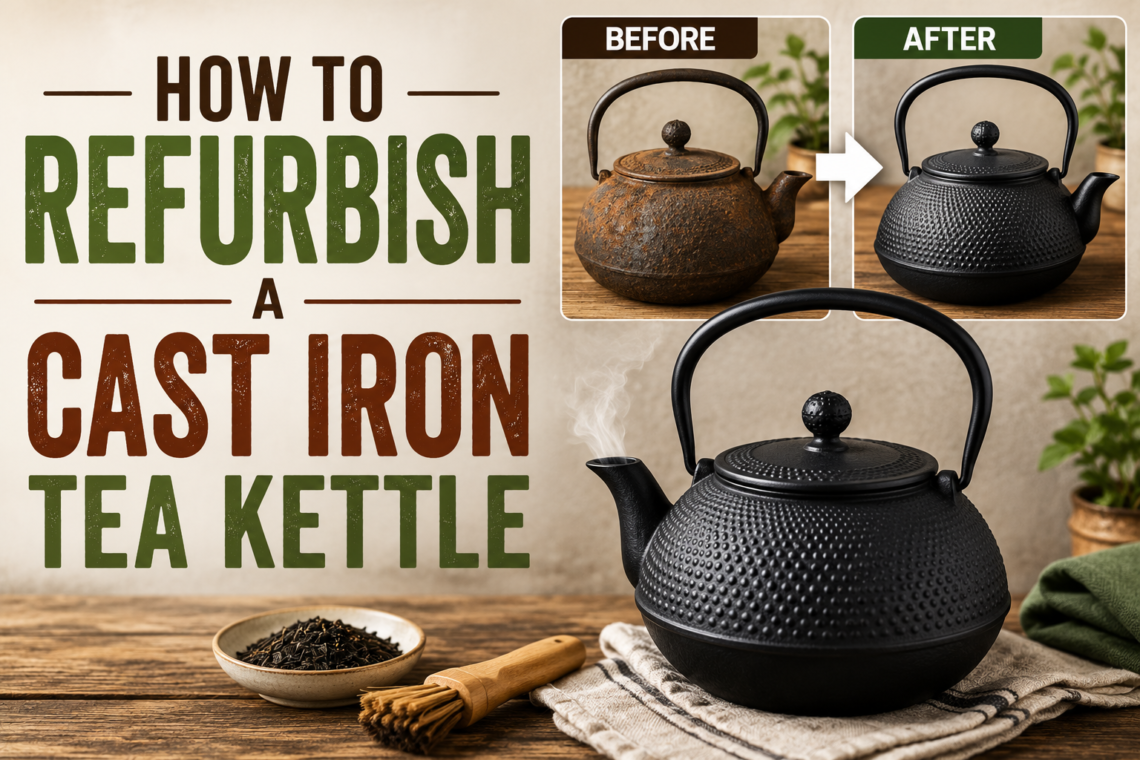
Many old tea kettles are made of cast iron and are meant to last for decades. In fact, there are many tea kettles that have been passed down from generation to generation and are still being used today. Like any item that is used frequently, a tea kettle can develop rust, stains and deterioration with time, but with proper care and maintenance, a cast iron tea kettle can become even more durable with time.
Cast Iron Tea Kettles are meant to last for decades. Many of them have even been passed down from generation to generation and are still being used today. If you find an old tea kettle in storage or if you have inherited one from a family member that needs to be refurbished, the process is quite easy and does not require any expensive products or labor. All that you need to do is remove the rust from the kettle, clean off any mineral deposits, dry the kettle thoroughly and lastly learn how to properly store and maintain your newly refurbished tea kettle so that it does not develop any rust in the future.
However, before we dive into how to restore your kettle, it is very important to figure out what type of kettle you have before you attempt to start cleaning it. There are two main types of cast iron tea kettles and they must be cleaned in two very different ways. If you clean a Traditional cast iron tea kettle with the wrong methods, you can end up doing serious damage to it and possibly rendering it useless. And, conversely, if you clean an Enameled cast iron tea kettle with the wrong methods, you can also end up doing serious damage to it as well.
Short Answer
Most cast iron tea kettles can be very easily refurbished by removal of the iron from rust, mineral deposits from the kettle, drying of the kettle and of the outside too. Painting or varnishing the kettle to restore it to its former appearance is all that is needed without risk of damage to the cast iron. Traditional cast iron tea kettles and enameled cast iron tea kettles are both suitable for refurbishment but must be treated in very different ways, ie as two very different types of cast iron kettle.
Read more: how much is a 12 pack of twisted tea
First, Identify Your Cast Iron Tea Kettle
Traditional Japanese tetsubin kettles have an unfinished cast iron interior. They were originally designed for boiling water and naturally develop a protective mineral layer over time. Finding a small amount of surface rust inside an older tetsubin isn’t unusual, and in many cases it can be restored successfully. Modern cast iron tea kettles, on the other hand, usually have a porcelain or enamel coating inside.
Traditional Japanese tetsubin kettles have an unfinished cast iron interior. These are designed to be used for the boiling of water. Naturally the interior will develop a protective mineral layer, and you can expect to find a small amount of surface rust on an older tetsubin, but it is usually no problem for a restorer to restore the kettle to full working order.
Modern cast iron tea kettles are typically found with a smooth interior coated with porcelain or enamel. These types of kettles are generally designed specifically for making tea and thus are heated over a flame. As a result, the kettles need to be cleaned with different methods than traditional cast iron kettles, because methods for cleaning cast iron can damage enamel coated cast iron.
Before starting any restoration, inspect the inside carefully.
A traditional kettle usually has:
- A rough cast iron interior
- No glossy coating
- Natural dark mineral buildup
- Slight surface rust after years of use
An enameled kettle usually has:
- A smooth glossy interior
- Black or colored enamel coating
- No exposed cast iron
- A glass-like finish
Knowing which type of kettle you have will prevent lots of potential mistakes when cleaning it.
Inspect the Kettle Carefully
Once you have determined whether your kettle is cast iron enamel coated or stainless steel, take a close look at the kettle. Even rusty kettles do not need to be restored. Some may only need to be cleaned.
When examining the kettle look for rusty spots, large amounts of dark mineral deposits, chipped paint, loose handles and cracks. Although some rusty areas can be cleaned off, others may cause serious damage if washed with harsh cleaners. Be aware of the differences between surface rust and deeper cracks and holes, as items with the latter may not be safe to use.
Pay particular attention to:
- Rust spots
- Heavy mineral deposits
- Chipped enamel
- Loose handles
- Cracks
- Water leaks
- Mold caused by improper storage
Taking a few minutes to inspect the kettle first can save hours of unnecessary work later.
Start With a Gentle Cleaning
Don’t over clean your old cast iron kettle with harsh chemicals or scrubbers. They can actually damage your kettle and cause you a lot of problems. Most old cast iron kettles can be cleaned quite easily with just a few rinses of warm water and then wiped down with a dry cloth to remove any dust.
When first removing items from a old kettle it is advisable to empty the kettle of any old water and wash down with warm water to remove any surface dust and any heavy mineral deposits. Often just rinsing the kettle in warm water will remove most of the old debris that has accumulated within the kettle.
Clean old cast iron kettles with mild soap and water and avoid using harsh chemicals to prevent removing the natural protective layer of seasoning that has built up on the surface of the cast iron. (the manufacturer may recommend using dish soap for cleaning if the kettle has been enamel coated but was sold as cast iron).
Mild soap is generally acceptable for enameled kettles; however, abrasive cleaners are not recommended.
Read more: how much loose leaf tea per cup
Removing Rust Without Damaging the Kettle
The vast majority of cases where people want to refurbish a cast iron kettle is due to light surface rust having formed on the iron. I say ‘vast majority’ because most rust is so easily removed when it is light and on the surface.
Mild rust can be removed from a kettle using a soft nylon brush or non-abrasive scrubbing pad. For tougher rust a paste made of baking soda and water can be applied to the affected area, and left to work for a few minutes before being scrubbed off.
Don’t be in a rush. Rust will generally travel just a short distance on a kettle and in most cases it will only cover the bottom of the appliance. So don’t allow yourself to be tempted to strip back more metal than necessary otherwise you will probably do more harm than good.
Avoid using:
- Steel wool inside enamel-lined kettles
- Wire brushes on coated interiors
- Chemical rust removers
- Bleach
- Sandpaper inside the kettle
Remove the rust slowly and carefully to avoid making sure that you do not do any damage.
Dealing With Mineral Deposits
The worst problem to deal with is white mineral deposits from hard water, which can penetrate right through the enamel to the metal below and cause serious problems, even leading to a hole in the kettle. Even if there is no problem as such, however, these deposits are a nuisance and can stain and eventually cause problems with heating.
Mineral deposits from hard water can also form a white film on the surface of your cast iron pot or kettle. While these deposits do not necessarily mean that your cast iron pot or kettle is damaged, they can leave white marks and make the pot or kettle appear worn. These marks can also interfere with the heating of your pot or kettle. To remove these mineral deposits fill your kettle with a solution of equal parts water and white vinegar, and let it sit for 30 minutes. After 30 minutes, carefully rinse the kettle with water, and use a soft cloth to wipe away any remaining mineral deposits. If necessary, repeat the process to remove all mineral deposits.
If necessary repeat the cleaning process several times. The risk of damaging the kettle by aggressive cleaning is much greater than the risk of having to repeat the cleaning process a few times.
Drying Is Just as Important as Cleaning
Most kettle restorations fail because the kettle was not dried properly after cleaning. The same amount of water that caused the initial rust can return in a short time and cause more rust.
After rinsing the kettle, dry it with a soft cloth. This will prevent any moisture from entering the kettle and causing more rust. Also, be sure to open the lid to allow air to escape and dry completely. In some cases, you may place the kettle over very low heat for a few minutes to dry it out completely. Just be sure to never heat it too much as this can cause damage.
Overheating the kettle should be avoided but placing the kettle over low heat for a few minutes will remove all of the moisture from the kettle. Drying the kettle completely will prevent new rust from forming.
Cast Iron Kettles last longer when dried properly.
Restoring the Exterior Finish
But on the outside of the kettle will be lots of marks and changes to the original finish including dust, iron oxide (rusters), scores and also wear to the printed decorations. It will generally look rather bad.
Fortunately, the exterior can be returned to its original brilliance by simply by means of regular maintenance.
Simple maintenance often includes:
- Removing loose dirt
- Cleaning decorative patterns
- Buffing gently with a soft cloth
- Removing light surface rust
- Wiping away excess residue
The mistake to avoid using waxes and chemical polishes unless explicitly recommended by the manufacturer of the kettle.
Read more: does manzanilla tea have caffeine
Mistakes That Can Permanently Damage a Cast Iron Tea Kettle
Many kettles that have been severely damaged were not old when the problems occurred. They were damaged during cleaning.
The biggest mistakes done to Cast Iron Tea Kettles which ruin them in the long run are mistakes done while cleaning them. Most of the time, people think that because their kettle is old, it can’t be fixed anymore. But the truth is, most damage done to Cast Iron Tea Kettles is caused by harsh cleaning methods and by simply not taking care of it.
Never do the following:
- Put the kettle in a dishwasher.
- Leave standing water inside overnight.
- Use bleach.
- Heat an empty kettle over high heat.
- Scrub enamel with steel wool.
- Never put your cast iron tea kettle away with the lid closed while it is still damp.
- Use harsh chemical cleaners.
Missing out these errors to fix a damaged kettle will do more good to the kettle than the actually restoring process.
Maintaining a Restored Cast Iron Tea Kettle
Once a kettle has been restored to life, it is easier to keep it in good condition than to restore it to life again.
After your kettle has been repaired best is to take care of it in order to prevent further damage. For maintaining your kettle in perfect condition it is enough to pay attention after every use. After every use of your kettle dry it out, empty it and put it in a place with good air flow. If you want your kettle to last for many years, then this is all you have to do.
Regular maintenance includes:
- Emptying leftover water
- Drying thoroughly
- Storing with the lid slightly open
- Using filtered water when possible
- Removing mineral deposits early
- Inspecting periodically for rust
Simple routines like these can keep your high-quality cast iron tea kettle in tip top shape for decades to come.
When Is a Kettle Beyond Repair?
Most cast iron kettles with light rust can be fixed with relative ease but not every kettle is worth saving.
Severe corrosion can cause holes in the kettle. In this case the kettle is best to be thrown away, as the risk of boiling water to leak and cause injury is to big to be ignored. Even if the kettle looks clean from the outside, it can be dangerous to use it.
Consider replacing the kettle if you notice:
- Large cracks
- Water leaking through the body
- Holes caused by rust
- Extensive enamel loss
- Loose structural components
When safety is a concern it is better to replace a kettle.
Final Thoughts
A cast-iron tea kettle does not have to cost an arm and a leg! In most cases, a few simple steps will do to clean, to remove any rust, to dry out completely, and to put it away in storage. All that is needed to do the task, is a little bit of TLC and some knowledge on how to go about refurbishing your old, so very precious, kettle. Once you have restored it to its former glory, maintenance will be a snap and your kettle will last for decades to come, if it is treated with care.
Frequently Asked Questions
Can I use vinegar to remove rust from a cast iron tea kettle?
Note: Vinegar is good for removing mineral deposits from your kettle, but can be used to loosen up light rust on the cast iron. However, it is not recommended to allow the kettle to soak for a long period of time as it may damage the cast iron.
Should I season the inside of a cast iron tea kettle?
Traditional Japanese tetsubin kettles are not usually seasoned on the inside of the kettle and this is also the case with enamel coated kettles as the enamel already provides a safe protective interior surface.
Can I put my cast iron tea kettle in the dishwasher?
No. In the dishwasher, cast iron kettles are exposed for a long time to moisture and to detergents.
Why does my cast iron kettle keep rusting?
The biggest culprit behind the kettle rusting is the moisture left in the kettle after use, which can dry and then proceed to cause damage to the kettle when it is stored in a humid environment and not allowed to completely dry.
How often should one deep clean a cast iron tea kettle?
A deep clean of a cast iron tea kettle is only required to remove rust or heavy mineral deposits from the kettle. Regular drying and other maintenance between uses is usually enough to keep your kettle in excellent condition.